

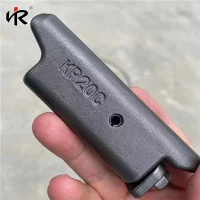
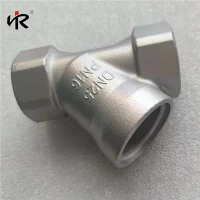
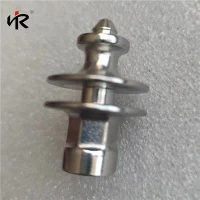
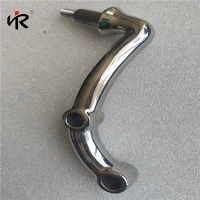
CNC Machined Steel Parts
China CNC Machined Steel Parts Manufacturers Factory Suppliers
We specialize in producing all kinds of CNC Machined Steel Parts products, mainly Milling Machined Parts, Turning Machined Parts, High Accuracy Parts Machining, High Hardness Steel Machining, etc.
HANRUI STEEL CUSTOMIZATION was established in 2009, boasting over 10 years of manufacturing experience, can provide customers with perfect solutions.
Our market is mainly concentrated in countries such as the United States, Australia, Canada, Finland, Belgium, Bulgaria, Germany, Japan, United Kingdom, Netherlands, Sweden, etc. We have established long-term cooperative relationships with customers around the world.
Company Advantages
Well-Experienced
HANRUI STEEL CUSTOMIZATION was established in 2009, boasting over 10 years of manufacturing experience. With a dedicated team casting engineers, and mechanical designers, we are committed to offering solutions to the steel accessory challenges faced across various industries.
Large Scale
With shares in two investment casting bases, one sand casting base, and two forging bases, we offer comprehensive one-stop services to our customers. From initial design and development to the delivery of flawless steel parts, we ensure a seamless and efficient process.
Advanced Production Equipment
We are a full-service company providing complete design, R&D, production and sales services. Our production workshop is equipped with the most advanced equipment. Innovation, powerful technology, and expertise make our equipment highly automated with various parameters that can be adjusted to meet the needs of most applications in the industry.
24-hour Online Customer Service
We have an experienced and professional customer support team to provide flexible service to customers around the world. Our customer service is available online 24 hours a day. After receiving the service information or feedback from the customer, we will reply and address the feedback in the shortest time.
Global Sales Network
Our market is mainly concentrated in countries such as the United States, Australia, Canada, Finland, Belgium, Bulgaria, Germany, Japan, United Kingdom, Netherlands, Sweden, etc. We have established long-term cooperative relationships with customers around the world. In addition, we also provide OEM/ODM manufacturing services to many customers.
Customized Services
We welcome product customization, and our team is capable of developing new products or providing technical solutions tailored to customer requirements. lf you have any special request, pls send us the details.
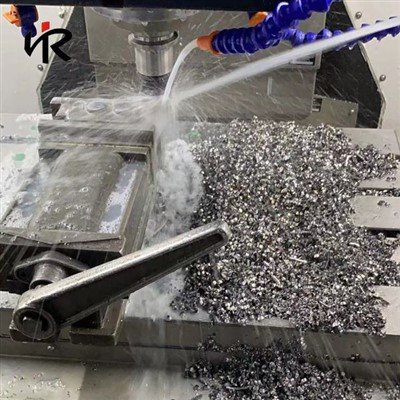
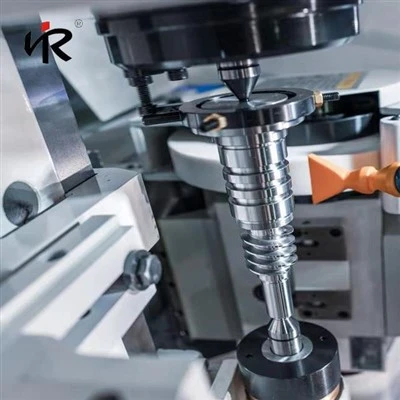
Introduction to CNC Machined Steel Parts
CNC machined steel parts are precise, intricate pieces made using computer-controlled machines that follow specific instructions to cut and shape materials. CNC stands for Computer Numerical Control, which is a manufacturing method that automates the control, movement, and precision of machine tools through the use of preprogrammed computer software. CNC machining is common in the manufacturing industry because of its speed, precision, and production efficiency.
Several materials are compatible with CNC machining, and steel is no exception. In fact, CNC steel parts are one of the most popular for custom machined parts and prototypes.
CNC machined steel parts are used in creating components for industries such as aerospace and automotive. The process involves rotating a workpiece while a cutting tool shapes it into the desired form.

Compared with CNC machining stainless steel, steel is much harder and stronger than stainless steel. And it is more practicability and economy.
● Durable : Steel is very strong and shock resistant. So it is a popular material for buildings, plumbing and supporting modern roads.
● Safety : Compared with many other materials, steel can be handled and used safely. It is also a good material that can withstand fires, hurricanes, tornadoes and earthquakes.
● Steel is easy to recycle, making it environmentally friendly.
● Economical : For many uses, such as pipes, steel can be made very thin compared to other metals. This makes it very cost-effective. For example, carbon steel pipes are cheaper than brass pipes.
● Healthy and durable cookware : Aluminum cookware can react with food and may cause health problems. Carbon steel cookware also has a longer life than aluminum.
Due to its strength, economy and safety, these are some of the main reasons why CNC machined steel is the best choice for so many applications.
Types of CNC Machined Steel Parts
High Accuracy Parts Machining
High accuracy parts machining, also known as high accuracy machining, is a manufacturing process that uses CNC machines or screw machines to produce metal components with very tight tolerances. The goal is to remove excess raw materials with extreme accuracy to create a finished product. This process is essential for industries that require high-quality products, such as aerospace, medical, and automotive.
High accuracy parts machining is a subtractive process, meaning that material is removed from a workpiece by the cutting tool. This contrasts with additive processes such as welding or casting. With those processes, material can be added during production for similar size/shape but different density.
High Hardness Steel Machining
High-hardness steel machining is a process that uses high-speed rotation to cut cast iron, mold steel, stainless steel, and other types of steel with a hardness of around HRC30. The process is called quenching, which makes the steel very hard but also brittle. To reduce brittleness without affecting the hardness, the material is reheated again and then left to cool naturally, which is called tempering.
Applications of CNC Machined Steel Parts
Automotive
Exhaust systems, fuel lines, and other automotive parts use cnc machined steel because they are durable and corrosion-resistant.
01
Marine
Due to its excellent corrosion resistance caused by seawater and other hostile environments, CNC machined steel part is frequently utilized in marine applications.
02
Medical
Medical items such as implants, surgical instruments, and other devices frequently need the precision and accuracy that CNC machined steel parts can offer.
03
Food and Beverage
Due to their sanitary qualities and corrosion resistance, free-machining CNC machined steel components are used in processing machinery, storage tanks, and other applications in the food and beverage sector.
04
Aerospace
Due to its strength, excellent corrosion resistance, and heat resistance, CNC machined steel components are employed in aviation engines, landing gear, and other crucial systems.
05
Essential Tools And Equipment For CNC Machined Steel
Achieving optimal results and maximizing productivity in stainless CNC Machined Steel requires specialized tools and equipment tailored to handle this durable material. These are some of the essential tools and equipment needed for CNC machined steel:
CNC Machines
The CNC machine, which might be a CNC lathe, CNC milling machine, CNC machining center, or CNC turning center, is at the heart of CNC machining steel. A strong and sturdy design is essential to bear the demands of stainless steel machining while providing exact results.
Cutting Tools
Various cutting tools are employed for different CNC machining operations for stainless steel. Some of the tools include carbide end mills, carbide drills, carbide inserts, solid carbide readers, and taps.
Coolant System
A dependable system is crucial for effective CNC machining steel. The material's low thermal conductivity requires efficient cooling to disperse heat during machining, preventing workpiece deformation and extending tool life. Water-based coolants or cutting fluids with high lubricity are commonly employed.
Tool Holders and Tooling Accessories
High-quality tool holders are essential for securely holding cutting tools in place during machining. Ensuring stability and reducing vibration improves machining accuracy and surface finish.
Workholding Fixtures
Securely holding stainless steel workpieces during CNC machining prevents movement and maintains dimensional accuracy. Workholding fixtures like vises, clamps, and chucks are commonly used.
Measurement Tools
Precise measurement is essential in CNC machining to ensure parts meet specified tolerances. Measurement tools, such as calipers, micrometers, depth gauges, and dial indicators, are indispensable for quality control.
Safety Equipment
Safety is paramount in CNC machining. Machine operators should wear proper personal protective equipment (PPE) such as safety glasses, gloves, and hearing protection to prevent accidents and injuries.
CNC Programming Software
Specialized programming software is essential for creating CNC programs. CAM software aids in generating tool paths and converting CAD designs into machine-readable code for CNC machines.
Grades Of Steel For CNC Machining
The application of CNC machining spans several materials. Choosing the right material for your project can be tricky, usually involving several factors. However, selecting the material to use, is just the first step. You still have to choose from the different grades available.
The properties of the steel grades inform their respective use for specific machining projects. Here are some of the commonest grades and their properties.
4140 Steel
This grade is low alloy steel, containing low chromium, molybdenum, and manganese. This chemical composition enhances the strength, ductility, and toughness of the steel grade. Also, added chromium content makes this grade more corrosion-resistant.
Consequently, it is used in many industries because of its good machinability and abrasion resistance. However, 4140 steel is not the easiest to weld and may require pre-and post-heat treatment. This grade is often found in CNC steel parts for couplings, spindles, bolts, nuts, and automotive parts.
4130 Steel
Compared to normal steel, 4130 steel has higher levels of alloying elements. It consists of iron, carbon, chromium, manganese, molybdenum, phosphorus, silicon, and sulfur. These elements are responsible for the toughness, machinability, and thermal compatibility of this steel grade.
It is commonly used for various construction purposes because of its ability to withstand high stress. Also, it is used in aircraft engine mountings. Manufacturers often favor 4130 steel over aircraft-grade steel because it is cheaper yet as effective.
1018 Steel
This steel grade is commonly regarded as mild carbon steel, consisting of iron, carbon, manganese, phosphorus, and sulfur.
The biggest selling point of 1018 steel in steel CNC machining is its high weldability, making it the default option for carburized CNC steel parts. Note, though, that welding is only advisable after carburizing.
Aside from being very weldable, 1018 steel has outstanding machinability. This is the basis for its use for CNC precision machining processes, like turning and milling steel. Practically, manufacturers use it for tie rods, spindles, shafts, and many other mold components.
1045 Steel
This is a medium carbon steel comprising iron, carbon, silicon, manganese, and sulfur or phosphorus. This is one of the most versatile grades of steel manufacturers use for CNC steel parts. 1045 steel is strong and tough, justifying its use in many CNC steel machining projects where water resistance is essential.
Additionally, 1045 steel is machinable and weldable, which are both important factors manufacturers consider when machining steel. The applications of this grade include ales, bolts, gears, shafts, and studs. Essentially, manufacturers prefer it for projects that require extreme speeds.
1215 Steel
This steel grade contains iron, carbon, manganese, phosphorous, and sulfur. Because of this steel grade's relatively high sulfur content, it is regarded as free machining steel. Also, many refer to it as screw stock because of its use for automatic screw machine processes.
1215 steel forms small chips during machining, allowing for higher machining rates and avoiding entanglement in machines. However, it is not very weldable. Furthermore, it is not as strong as other cold-drawn grades because of its relatively low carbon content.
Industrially, it is suitable for automatic projects where heavy machining is necessary. Its applications include studs, pins, screws, couplings, and hose fittings.
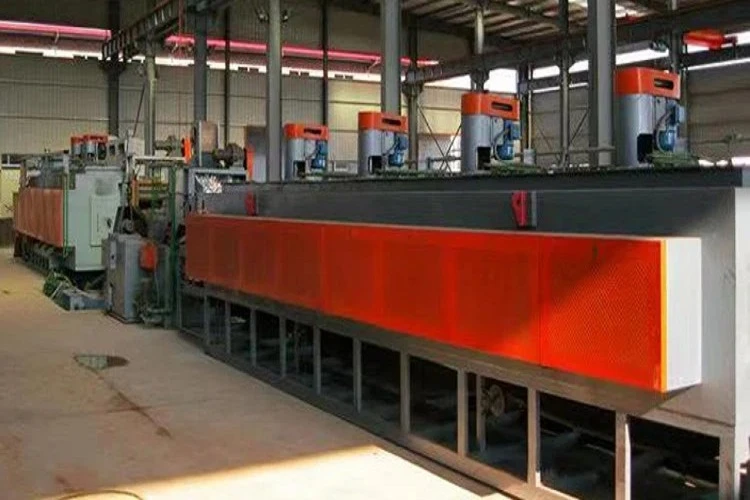
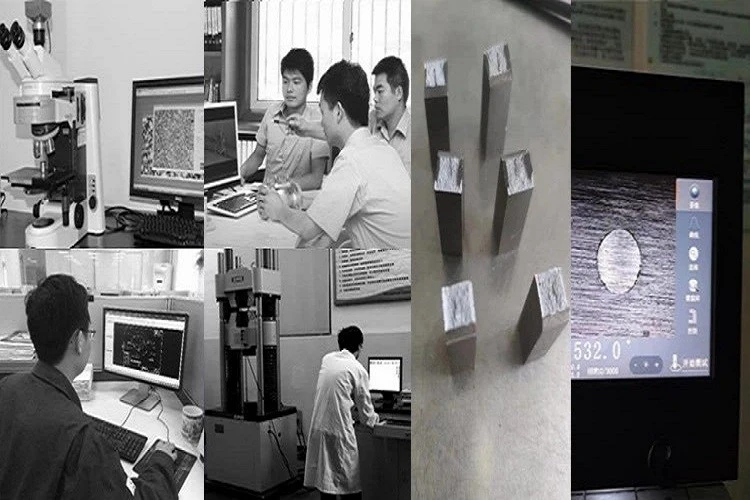
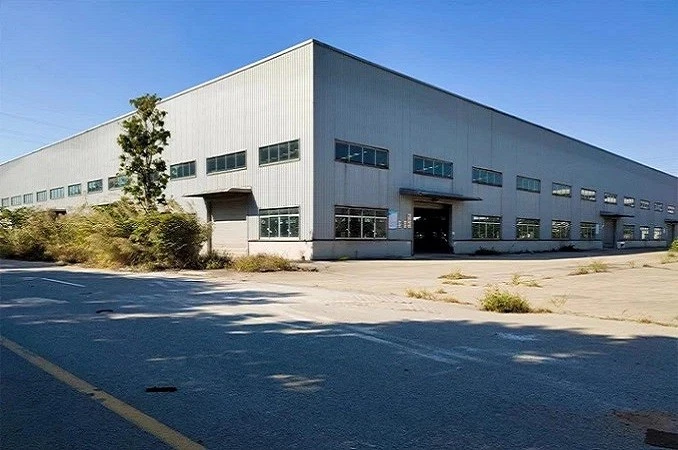
Our Factory
We have a fully automatic CNC production line, and are committed to providing customers with the best products and services.

Frequently Asked Questions
Q: What grade of steel is best for CNC machining?
Even though there are 100s of different steel alloys, only about 10-12 different alloys are used for the majority of CNC machined parts.
Carbon steel alloys with added lead (usually ~0.2%) have the best machinability. These alloys are also considered free-machining steel alloys.
12L14 steel is the most popular free-machining alloy steel. This metal is ideal for complex part designs and tight tolerances. The lead and sulfur allows 12L14 to be machined quickly and efficiently, and makes a smooth finish easily achievable. 12L14 steel is often used as the standard machining cost factor that other materials are compared to.
4130 and 4140 alloy steel are also popular alloys for machined parts. These alloys are more expensive to machine, but they're stronger and more resistant to wear. These alloys are commonly used for automotive, military, and aircraft parts. They have great fatigue resistance, which makes them ideal for engine and transmission parts that need to maintain their strength in high stress environments.
Q: How much does it cost to CNC machined steel?
The part design, order quantity, and specific alloy of steel have a big impact on the machining costs.
It's less expensive to machine softer metals like aluminum and brass, but the raw materials are more expensive than steel. Harder metals like stainless steel and titanium are more expensive raw materials, and more expensive to machine.
Simplifying part design, ordering higher quantities of parts, and choosing a less expensive alloy will lower machining costs.
Q: How Thin Can CNC Machined Steel Parts Be?
Q: What are the surface treatment processes of CNC Machined Steel?
Powder Coating: Powder coat finish involves depositing dry powder on the surface of the steel. The finish is typically between 0.15 and 0.3 mm thick. The apparent benefit is to increase the CNC steel parts' resistance to corrosion.
Carburizing: Carburizing hardens metal surfaces. The process revolves around heating steel metal in the presence of materials containing carbon, like carbon monoxide and charcoal. Besides hardness, carburizing also enhances the resistance of the CNC steel parts to wear.
Nickel Plating: This surface finish involves electroplating steel metal by adding a thin layer of nickel, around 0.1 mm. This can improve the resistance of the steel parts to corrosion and wear.
Grinding: Grinding helps to smoothen the steel surface, removing irregularities. Manufacturers do this using a grinding wheel.
Q: CNC Machined Steel Vs. Aluminium: What's The Difference?
CNC Machined Steel vs. Aluminium: Machinability
Machinability depends on a variety of factors, including the hardness and strength of the metal. Generally, the harder a metal is, the lower its machinability. That principle holds true for aluminum too.
Steel has a higher Brinell hardness range (80 and 600) than aluminum (around 15). Similarly, steel has higher tensile and yield strength than aluminum. Therefore, steel is stronger but less machinable.
CNC Machined Steel vs. Aluminium: Speed
Because aluminum is lighter than steel, machinists can work on it at a faster pace. Also, aluminum cools faster than steel after heating. This implies that there are longer manufacturing cycles when machining steel.
CNC Machined Steel vs. Aluminium: Cost
Many times, the decision between steel and aluminum boils down to cost. This is especially so when both materials are suitable for a particular project. While there are different kinds and grades of these metals, steel CNC machining generally costs more than aluminum.
Q: What Is High Accuracy Parts Machining Used For?
Industries that often use high accuracy parts machining include automotive, aerospace, and medical industries. In such sectors, flaws in a machined part can have catastrophic consequences. You certainly don't want an aerospace part to fail while in midflight or a medical device to suddenly stop working. That is why so many quality-dependent parts rely on the consistent, high-precision of computer-controlled machines.
Q: What are the advantages of Milling Machined Parts?
Control over cutting process: Milling machines allow for precise control over the cutting process.
Versatile: Milling machines can perform various milling tasks using different shapes and mechanical applications.
Grinding: Milling machines can grind materials faster than hand grinders, making them more efficient for large grinding tasks.
reproducibility: CNC milling ensures products consistently meet industry regulations, which is important for safety in high-stakes industries like healthcare and aerospace.
Customizable: Horizontal milling machines are more customizable than vertical milling machines. For example, some add-ons and cutting heads can allow a horizontal mill to function as a vertical mill.
Machining larger workpieces: CNC milling machines can process both small and large parts.
Q: What Are the Advantages of the Turning Machined?
1. All Materials Are Interchangeable: While turning is mainly used to machine metals, any material can be used in turning, including wood and plastic. This makes turning a very flexible process.
2. Tolerance is Excellent: Turning Machined can be used to create parts with extremely high tolerances. Because of the high tolerances and surface finishes that turning can offer, the process is often used for adding precision rotational features to a part whose basic shape has already been formed through a different method.
3. The Lead Time is Short: Turning Machined has a short lead time. Lead time is the time between when the customer places an order and when the customer gets the final delivery. Because turning machined is a fast process, the lead time is short.
4. There is No Need for a Highly Skilled Operator: Turning Machined does not require a highly skilled operator of the machine. To handle a CNC lathe, a machinist can complete a set amount of coursework and earn certification from an accredited industrial training organization.
5. The Pace of Material Removal is Adjustable: Another advantage of turning machined is that the pace of removing material is adjustable. Lathes can operate at different speeds depending on the machined material or the desired end product.
Q: What are the properties of high hardness steel?
Hardness: As the name suggests, the primary characteristic of high hardness steel is its exceptional hardness. Hardness is the material's ability to resist indentation or penetration by an external force. This property is measured using various scales, such as the Rockwell hardness scale (HRC) or the Vickers hardness scale (HV). High hardness steel typically exhibits a hardness well above that of standard structural steels.
Wear Resistance: High hardness steel is renowned for its superior wear resistance. It can withstand contact with abrasive materials, friction, and repeated impact without experiencing significant wear or loss of material. This property is especially beneficial in applications where parts are subjected to sliding, rolling, or impacting contact with other surfaces.
Strength: Hardened steel retains a significant portion of its original strength while achieving high hardness levels. This combination of hardness and strength allows the material to withstand heavy loads, shocks, and stresses without deforming or failing.
Toughness: While high hardness steel is not as tough as some other steel types, it still possesses a certain level of toughness. Toughness refers to the ability of a material to absorb energy before fracturing. The heat treatment processes used to achieve high hardness often involve a balance between hardness and toughness to ensure that the material doesn't become excessively brittle.
Limited Ductility: One trade-off of achieving high hardness is a reduction in ductility, which is the ability of a material to deform plastically before fracturing. Hardened steel tends to have reduced ductility compared to softer steels, making it more susceptible to catastrophic failure under certain conditions.
Corrosion Resistance: Depending on the specific alloying elements used and the surface treatment applied, high hardness steel can exhibit improved corrosion resistance compared to regular carbon steels. This is especially true for stainless steels, which contain chromium for enhanced corrosion resistance.
Machinability: Hardened steel is generally more difficult to machine compared to softer steels due to its increased hardness. Special tools and machining techniques may be required to work with high hardness steel effectively.
Q: What are the applications of High Hardness Steel?
Cutting tools, such as drill bits, milling cutters, and saw blades.
Bearings and bearing components.
Springs and spring components.
Wear-resistant machine parts and components.
Armor and ballistic protection.
Tools and dies for forming and stamping processes.
Automotive components subject to wear and impact, like gears and shafts.
Q: What are the disadvantages of High Hardness Steel?
Brittleness: Hardened steel can be more brittle and prone to cracking or breaking.
Lack of ductility: Hardened steel has more strength, which can lead to a lack of formability.
Can't be filed: Hardened steel can't be filed.
High density: Steel alloys are considerably heavier than other structural materials such as aluminum and titanium.
Difficult to weld: Pre-hardened steel is not recommended to weld due to its susceptibility to cracking even when preheated.
Causes tool wear: Can cause some tool wear during machining and requires slower cutting speeds due to its hardness.
More expensive: High-speed steel is typically more expensive than other steels.